Transit Destination Signs

Transit Destination Signs

Destination signs formerly used on public transit vehicles

Route Number, Name, and Destination

Public transit vehicle destination signs have seen significant changes in recent decades, from improvements in legibility and material to advancements in technology. Over the years these signs went from being simple, stenciled and screen printed roller/curtain-style signs or rollsigns to today’s very visible and programmable electronic signs. Despite having been almost entirely replaced by modern electronic signs, rollsigns remain popular as pieces of public transit art, interest, and history with numerous examples kept and preserved in public and private collections worldwide.

Highlights

Highlights

Rollsigns

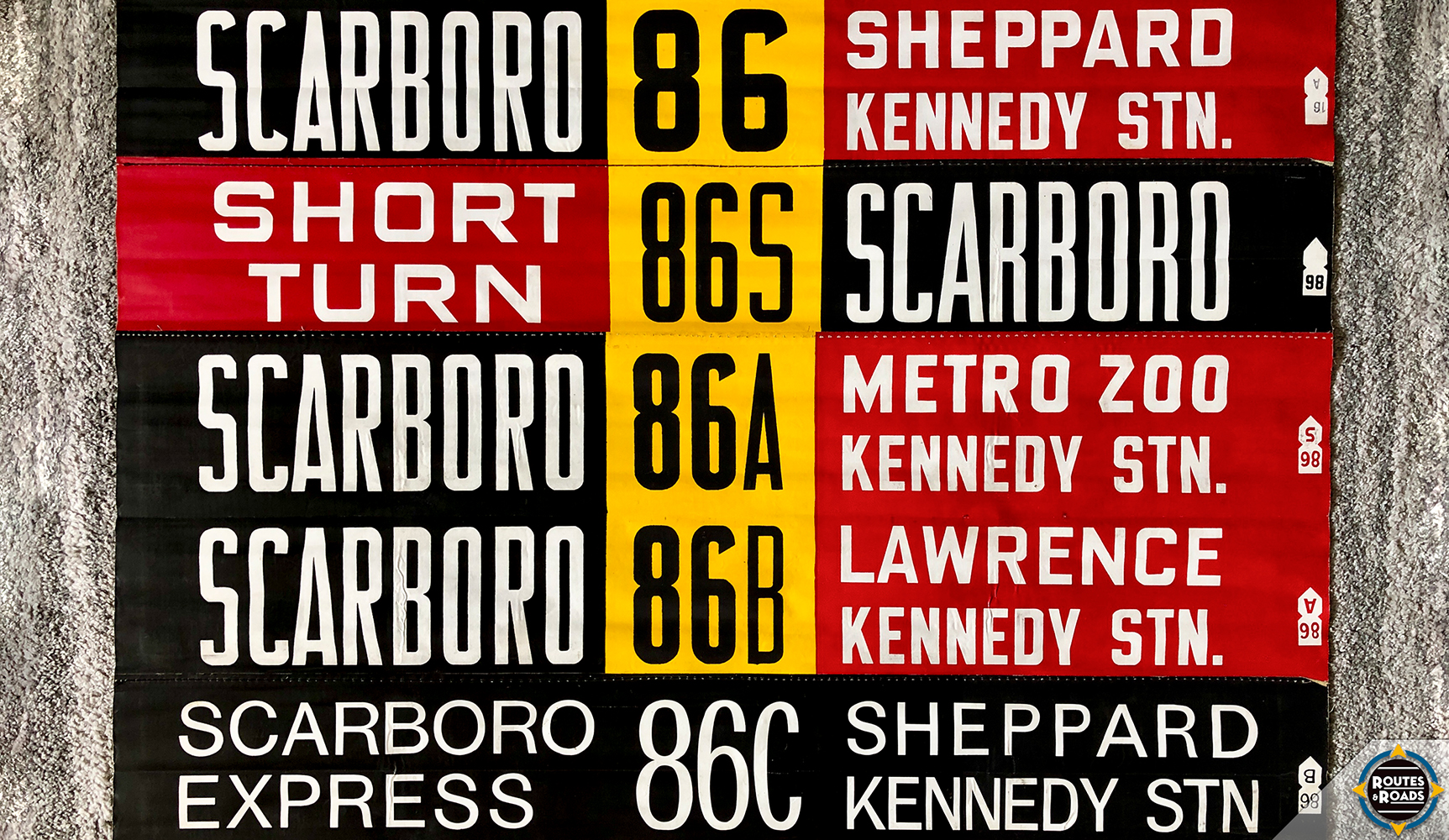
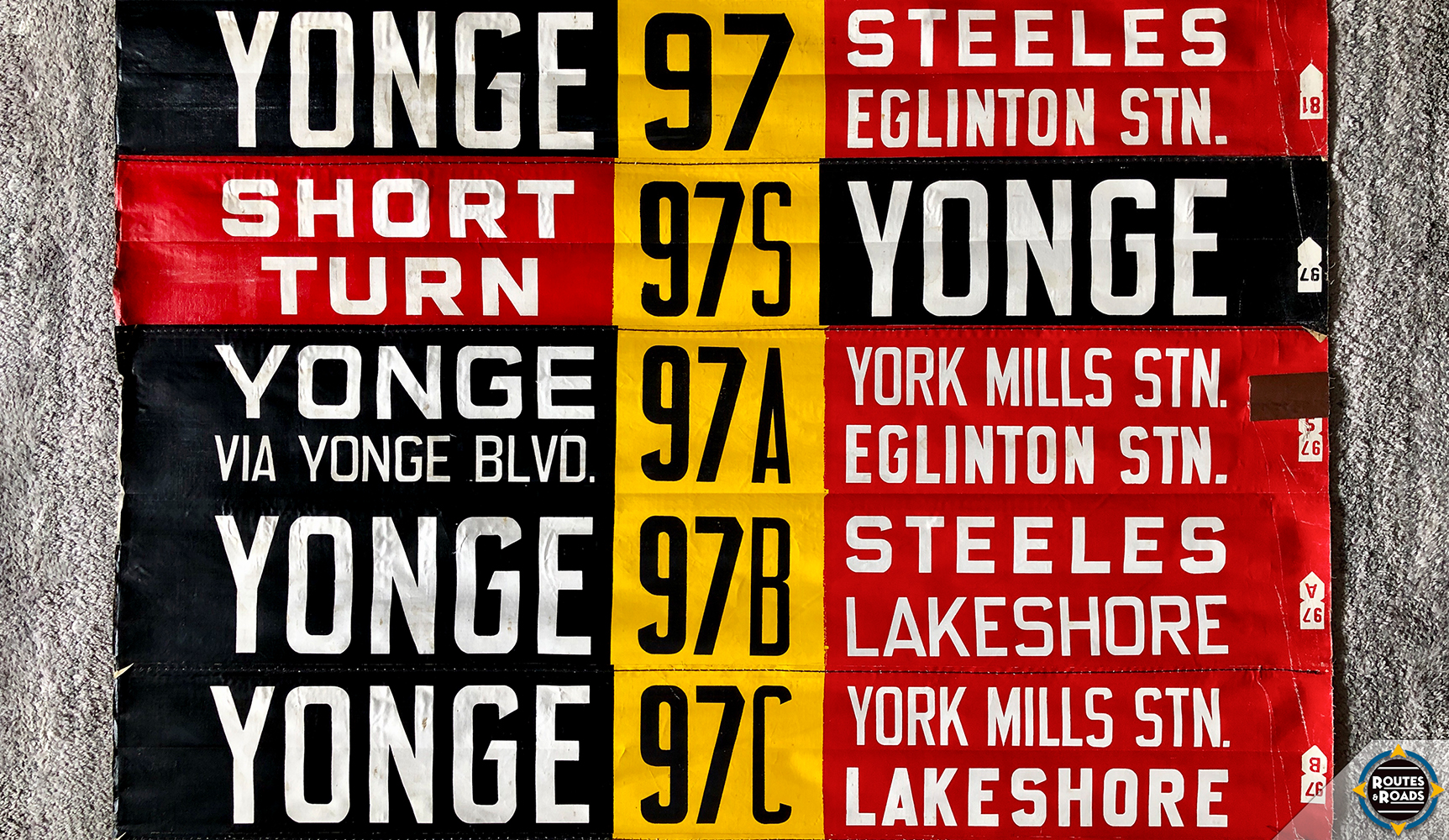
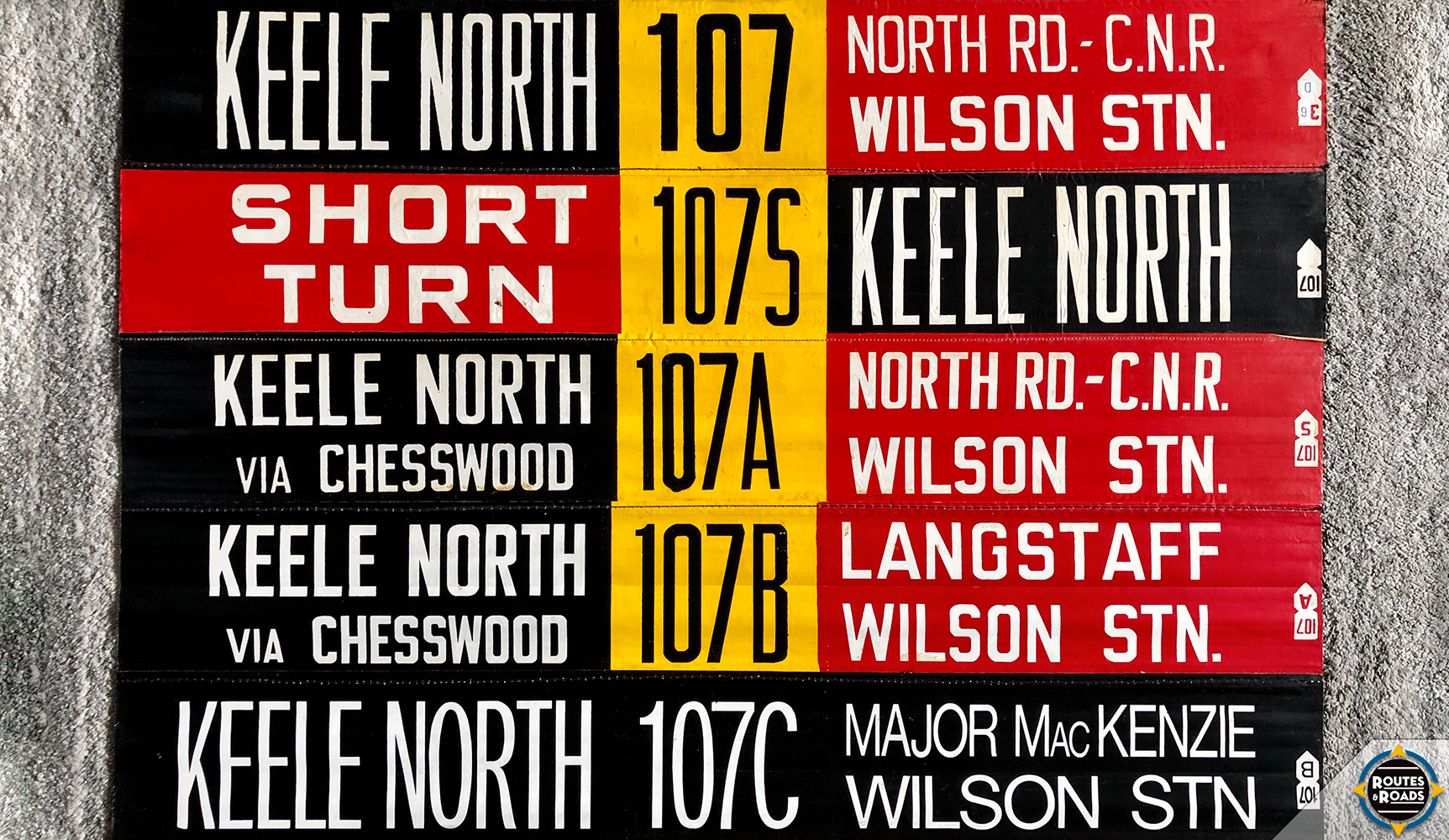
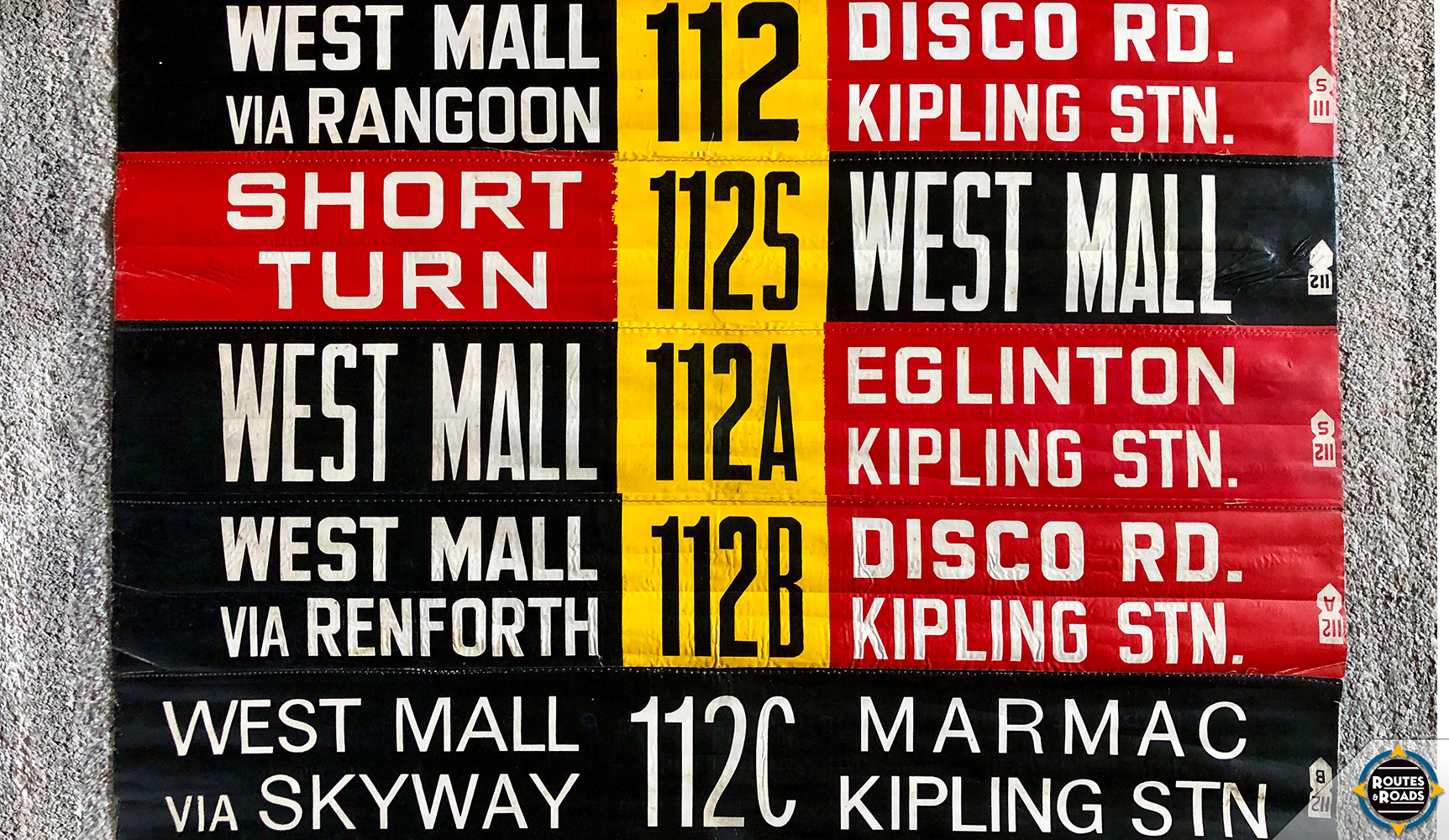
In the old days, exposures on these signs were often stenciled and screen printed onto long rolls of linen and rolled over two long rods spaced apart a distance equal to the height of one exposure and placed within a box with a motor or crank, so as to be able to roll to and expose one exposure at a time. A backlight illuminated these exposures in low light conditions [1].

To Mylar from Linen

Linen was eventually replaced with Mylar which is a plastic and film-like material that is water-resistant. Rollsigns made from this material were also easier and cheaper to produce as the manufacturing process involved digital printing as opposed to manual stencilling and screen-printing [1].

Flip-Dot Signs

Eventually programmable displays made their debut in the form of analog electromagnetic flip-dot or flip-disc displays that eliminated the need to scroll thru dozens of exposures which was time-consuming, tedious, and wore out the roller/curtain-style destination signs over time. Multiple exposures could be displayed a few seconds apart with a left-to-right scrolling transition in between each one [2].

Ambient Lit to Self-Illuminated

Early designs required an ambient light source below such as tube lights to illuminate the signs in low light conditions but later designs featured self-illuminated flip-dots [2].

LED Signs

While programmable and easier to read in low light and from a distance, due to their mechanical nature and other reasons the individual dots on flip-dot signs would sometimes get stuck, potentially resulting in unreadable exposures from time to time [2]. With further advances in display technology, LED signs were introduced that eliminated that issue and transitions between exposures, and further improved legibility in practically all lighting conditions [3].

A Modern Standard

LED destination signs are the current standard in North America thanks to their better visibility and lower maintenance costs, however the older flip-dot signs, particularly those with self-illuminated dots, remain in use in other parts of the world mostly due to their more traditional appearance and lower power consumption [3].
Sources
  1. “Destination Sign.” Wikipedia, Wikimedia Foundation, 27 Aug. 2024, https://en.wikipedia.org/wiki/Destination_sign
  2. “Flip-Disc Display.” Wikipedia, Wikimedia Foundation, 8 July 2024, https://en.wikipedia.org/wiki/Flip-disc_display
  3. Prickett, Simon. “Flip Dot Displays with Raspberry Pi.” simonprickett.dev, 3 June 2023, https://simonprickett.dev/flip-dot-displays-with-raspberry-pi
Sources:
  1. “Destination Sign.” Wikipedia, Wikimedia Foundation, 27 Aug. 2024, https://en.wikipedia.org/wiki/Destination_sign
  2. “Flip-Disc Display.” Wikipedia, Wikimedia Foundation, 8 July 2024, https://en.wikipedia.org/wiki/Flip-disc_display
  3. Prickett, Simon. “Flip Dot Displays with Raspberry Pi.” simonprickett.dev, 3 June 2023, https://simonprickett.dev/flip-dot-displays-with-raspberry-pi

Media Gallery

Media Gallery

Media Gallery

Media Gallery

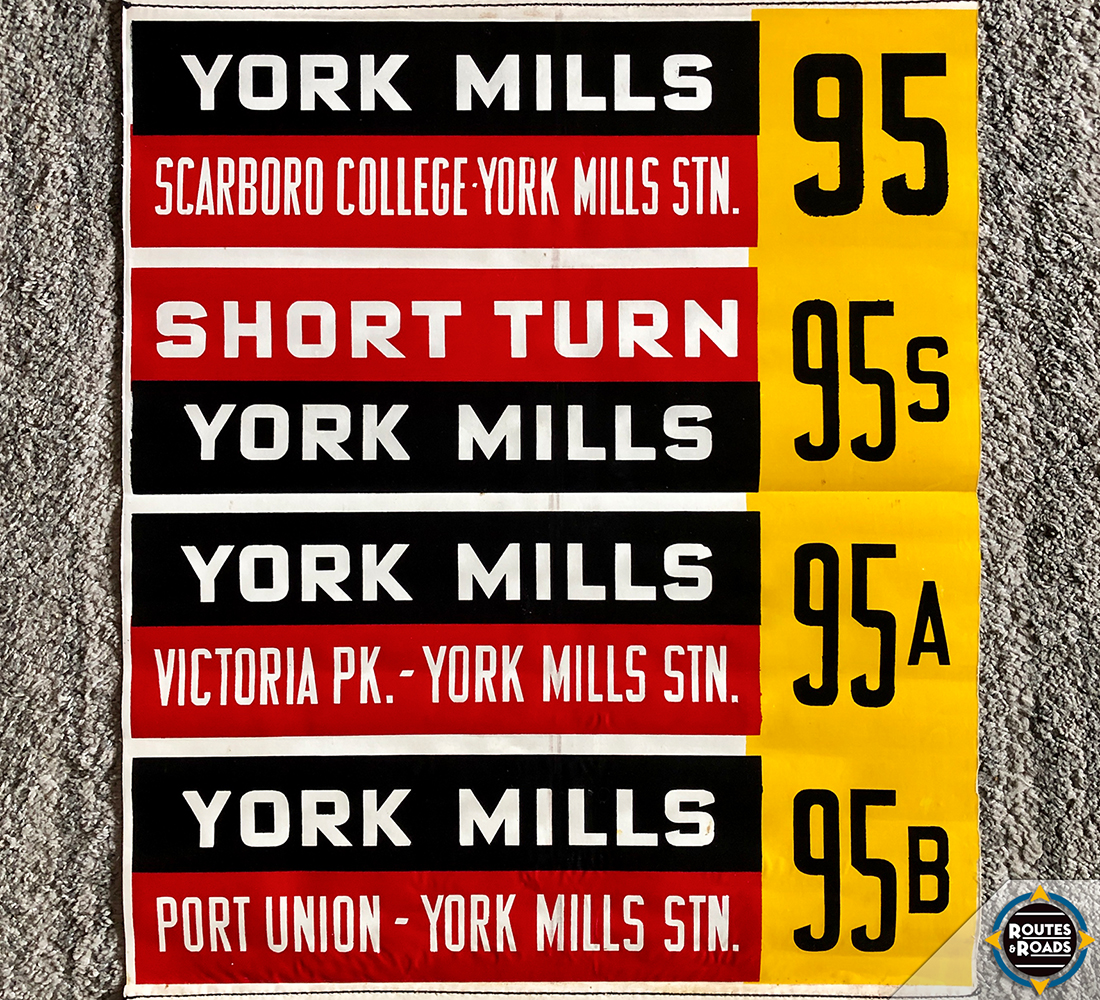
Toronto Transit Commission (TTC) side linen rollsign exposures for route 95 York Mills, dating back to pre-fall 1984.

$

Media Gallery

Media Gallery

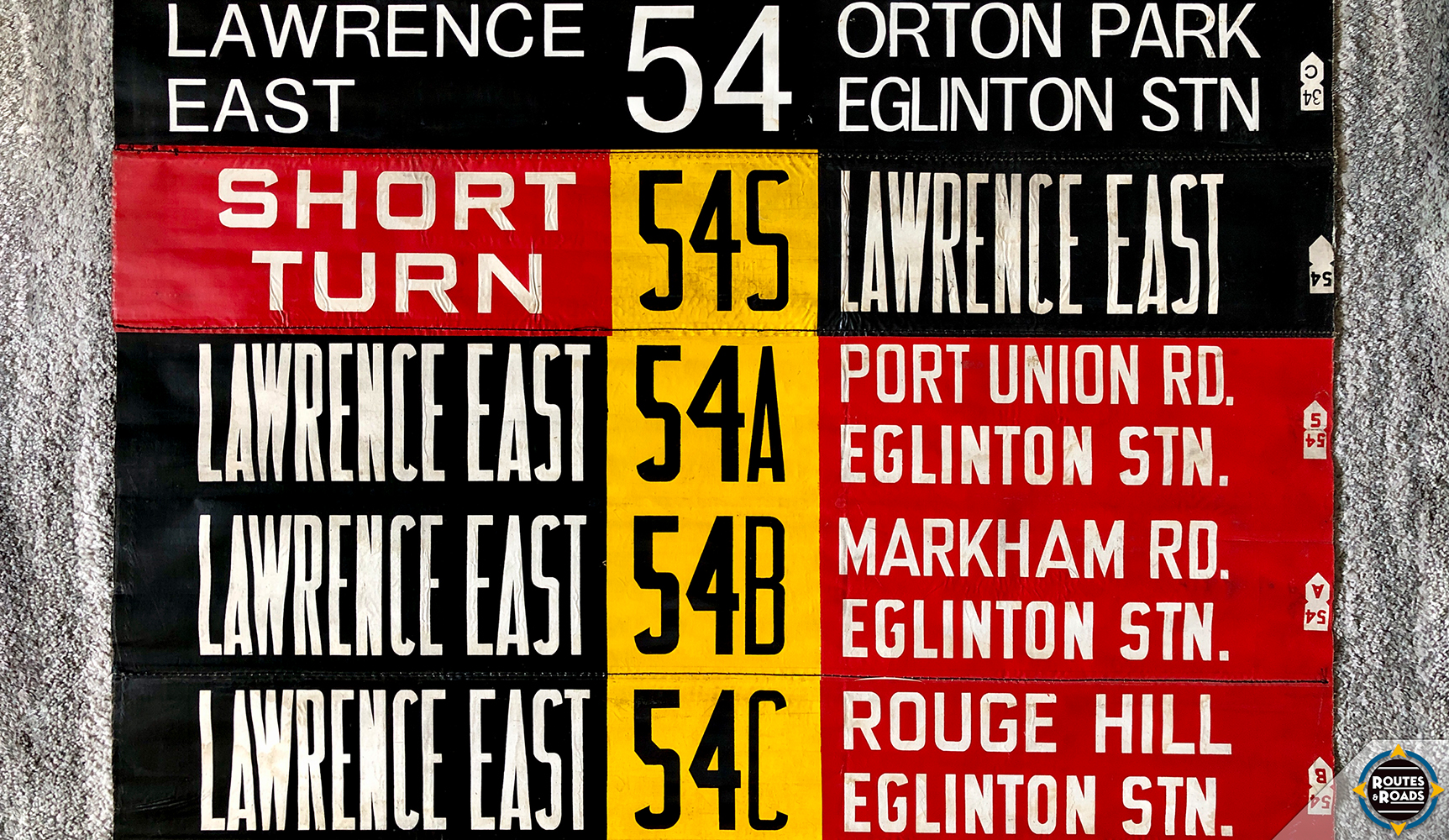
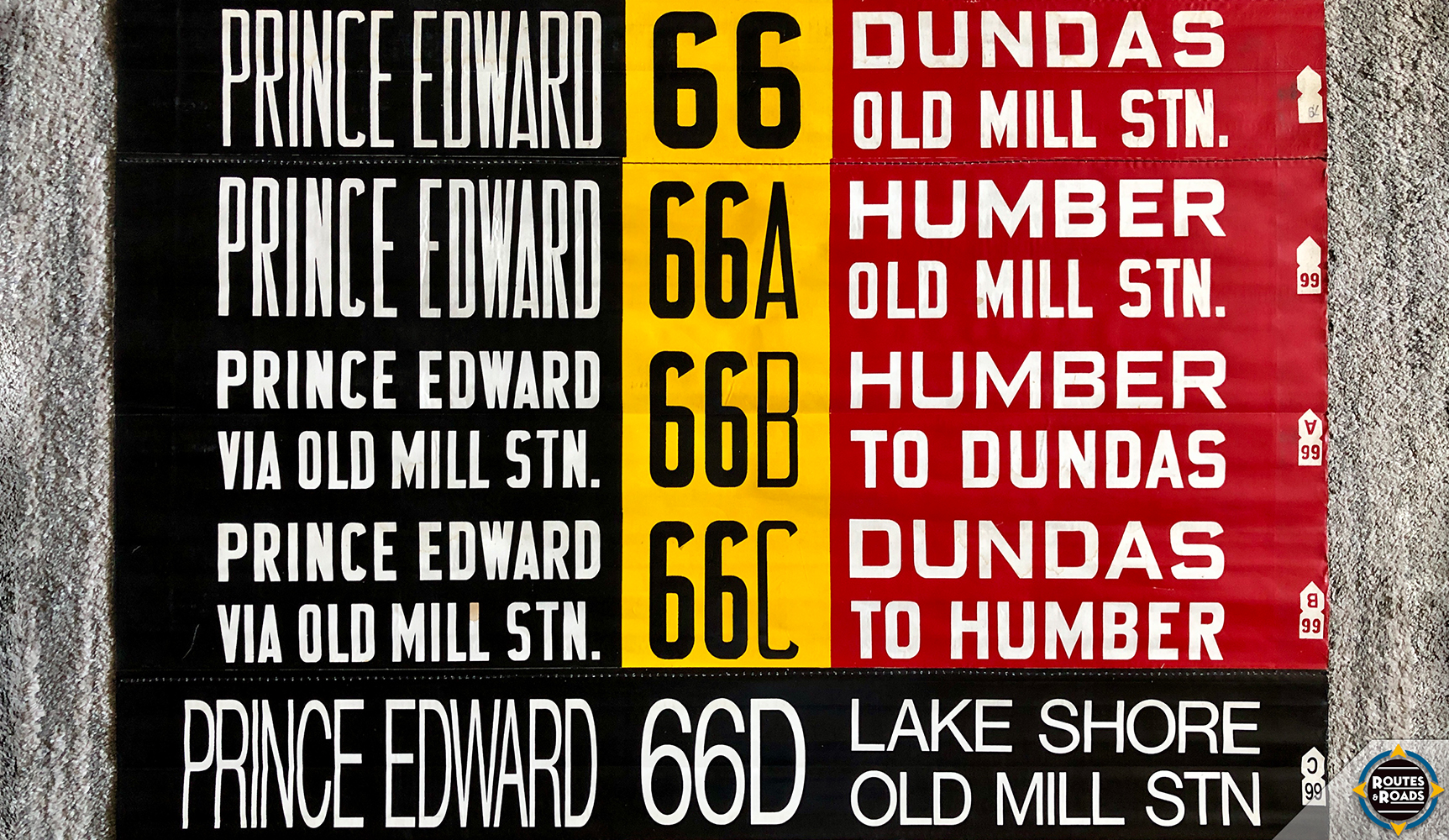
*The photos of the rollsign sections below were taken with the rollsigns unrolled and completely intact. The rollsigns were not cut.
*The approximate dates of the rollsign exposures are sourced from Transit Toronto ↗

Other Galleries

Related Galleries

Explore
Drag