Transit Authentic Items

Transit Authentic Items

Items formerly or currently used by transit agencies

Transit Memorabilia

When transit vehicles are retired from service due to age, condition, or changing agency requirements, they either go on the second-hand market or straight to the scrapyard. Ultimately not all transit vehicles that reach the end of their serviceable lives with one agency are repurposed with another agency or preserved, though a certain historically significant number do find their way into museums, historic fleets, and private hands. For the remainder however, the best case scenario is the salvaging and preservation of special or significant components of interest.

Highlights

Highlights

The Yellow and Red Keystone

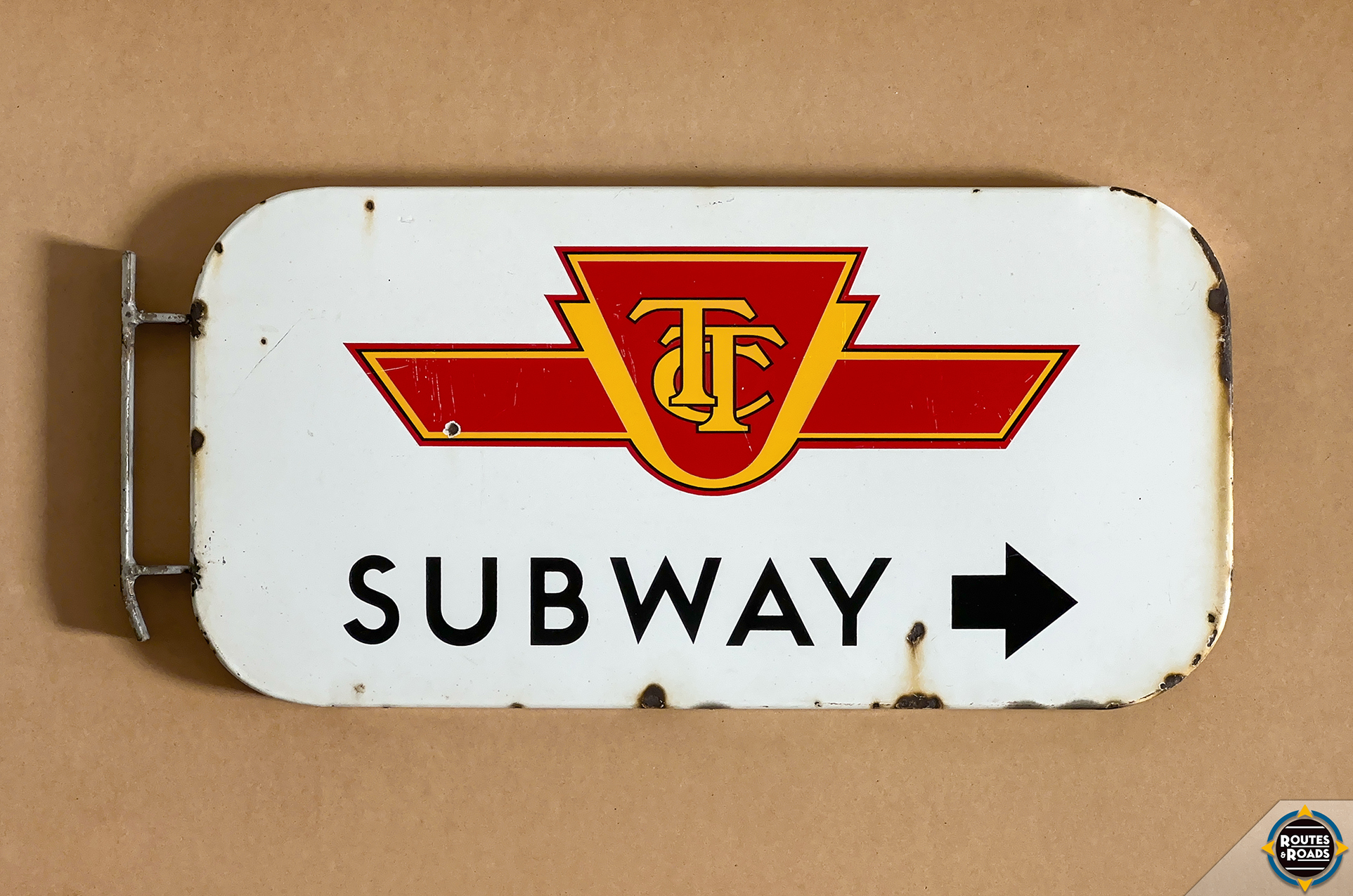
The Toronto Transit Commission's current "keystone" logo dates all the way back to the early 1950s [1] and has definitely endured the test of time. The logo has seen very minor revisions over the decades and also came in a version that was very commonplace outside the entrances to subway stations, spelling out "SUBWAY" across the red ribbon at the bottom. Yellow and red were the official colours used up until the late 1970s; the introduction of the CLRV streetcars saw yellow replaced with white [2].

Few Examples Remain

Due to rapid network modernization efforts in recent years, signage with the vintage yellow and red logo has been extensively replaced. The few examples that remain are in less conspicuous areas or areas where signage and station modernization hasn't been completed or started.

Platform Wayfinding

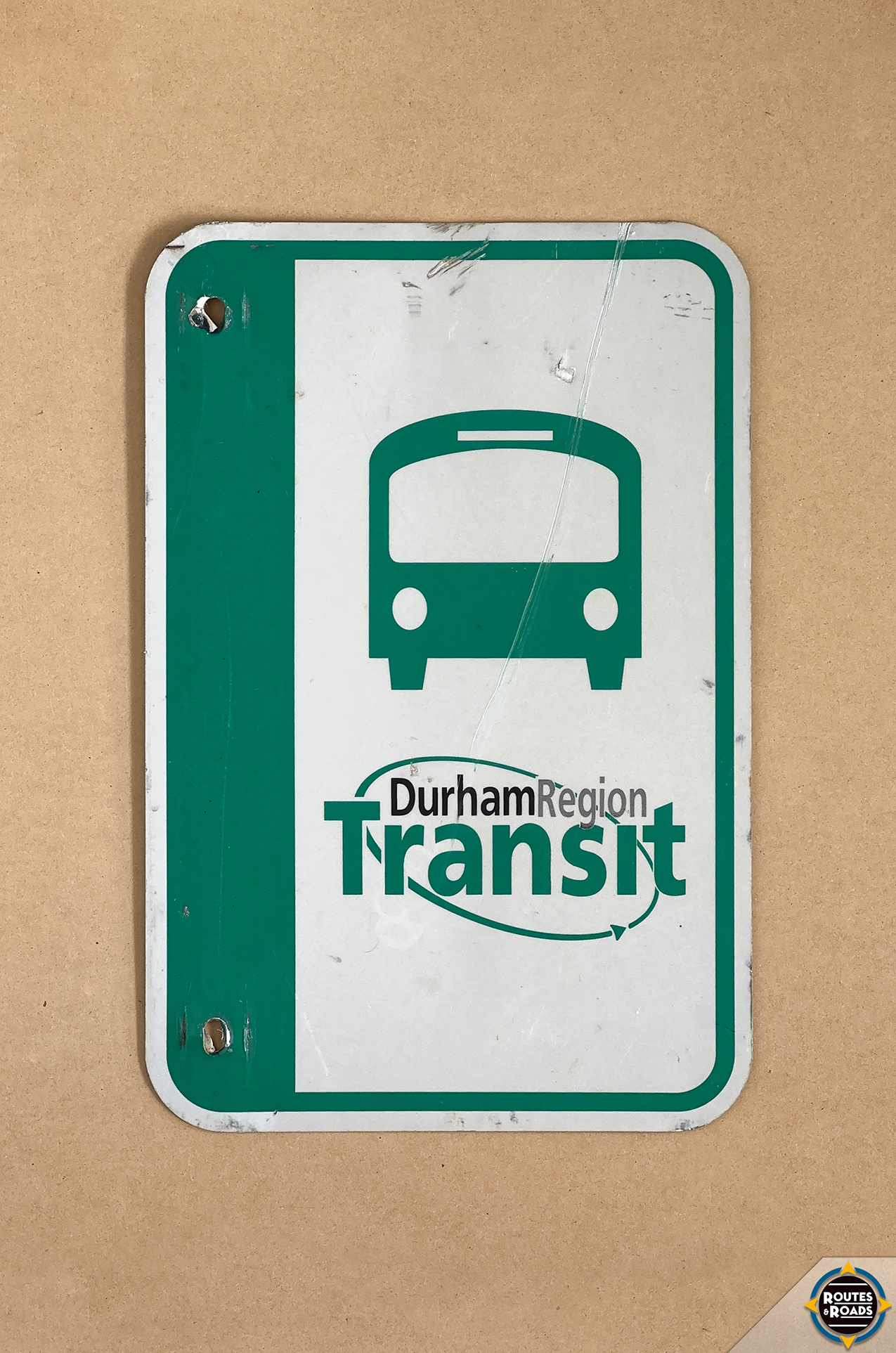
Since the advent of public transportation, printed static signage has served as the primary means of conveying route and destination information to passengers at transit hubs and station platforms. Depending on the era and location, these signs were produced from a variety of materials and featured distinctive visual characteristics including layouts, shapes, typefaces, and colour combinations specific to a transit operator or agency.

Digitization and Real-Time Information

With the adoption of GPS tracking and digital signage, many larger transit agencies have replaced — or are in the process of replacing — printed, static transit hub and station platform signs with digital equivalents that deliver real-time vehicle arrival information (provided by NextBus or other tracking service providers) and service updates [3]. Some of these digital signs are simple LED matrices while others are full-screen displays.

Route Variant Identification

Prior to the modern era, special or conditional route variants incorporated the use of physical items or components on transit vehicles to allow waiting passengers to distinguish from local or conventional service from a distance. The best examples of these items include window cards, short turn flaps (common on trams/streetcars of the day), and express flags.

Digitization

With advances in display sign technology over the decades, the need for physical identifiers for route variants on transit vehicles diminished in favour of digital route and destination signage [4]. Express and short turn services or branches are now incorporated into digital exposures used to identify and communicate route and destination information.
Sources
  1. Bateman, C. “TTC’s Subway Station Typeface a Font of Intrigue.” The Globe and Mail, 14 Apr. 2018, https://archive.ph/xk6Fs
  2. “Toronto Transit Commission.” Logopedia, https://logos.fandom.com/wiki/Toronto_Transit_Commission Accessed 12 Feb. 2026
  3. “Real-Time Information.” TransitWiki, 2 Feb. 2018, https://www.transitwiki.org/TransitWiki/index.php/real-time_information
  4. “Destination Sign.” Wikipedia, Wikimedia Foundation, 16 Jan. 2026, https://www.en.wikipedia.org/wiki/Destination_Sign
Sources:
  1. Bateman, C. “TTC’s Subway Station Typeface a Font of Intrigue.” The Globe and Mail, 14 Apr. 2018, https://archive.ph/xk6Fs
  2. “Toronto Transit Commission.” Logopedia, https://logos.fandom.com/wiki/Toronto_Transit_Commission Accessed 12 Feb. 2026
  3. “Real-Time Information.” TransitWiki, 2 Feb. 2018, https://www.transitwiki.org/TransitWiki/index.php/real-time_information
  4. “Destination Sign.” Wikipedia, Wikimedia Foundation, 16 Jan. 2026, https://www.en.wikipedia.org/wiki/Destination_Sign

Media Gallery

Media Gallery

Media Gallery

Media Gallery

A vintage 1960s Toronto Transit Commission (TTC) enamelled steel subway directional sign. Very few examples remain in use on the system today.

$

Other Galleries

Related Galleries

Explore
Drag